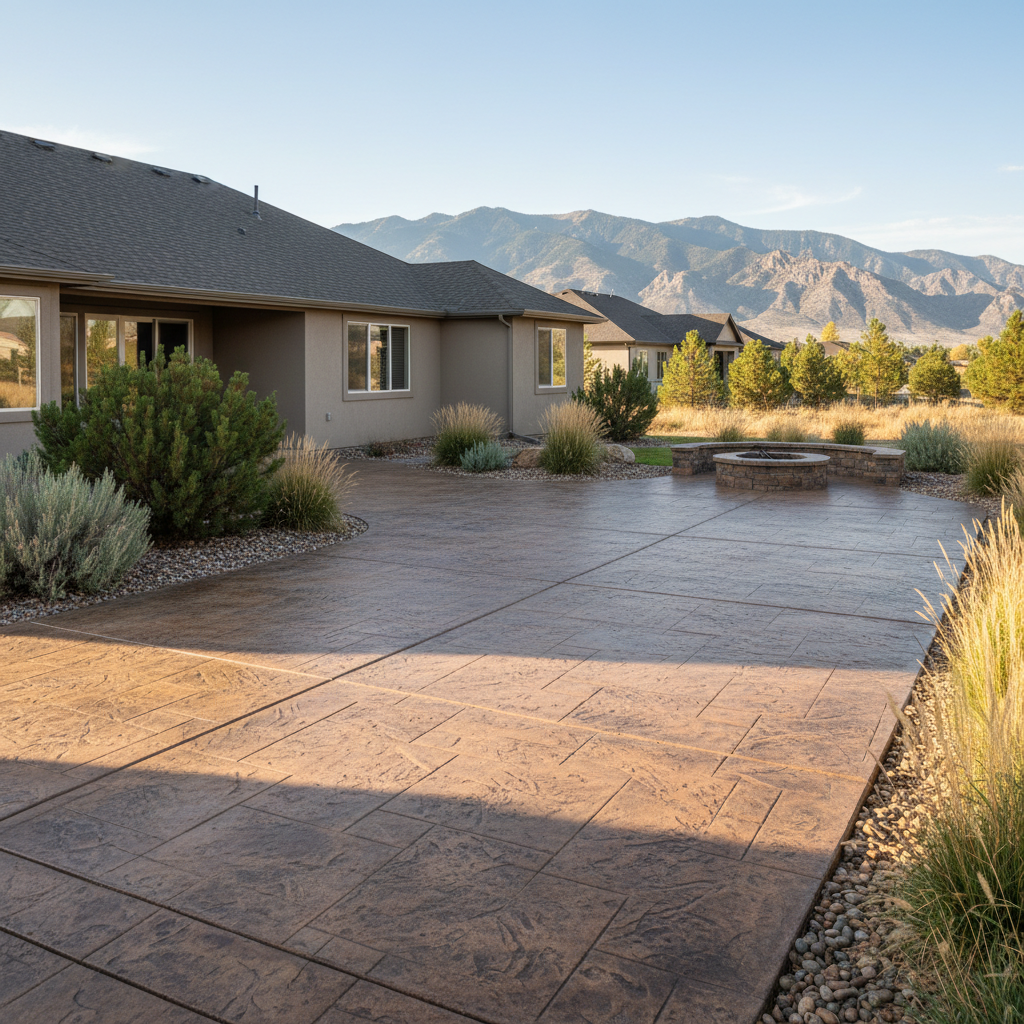
So, you've got some great-looking stamped concrete, right? Maybe it's a patio, a walkway, or even a fancy driveway. You picked it because it looks good and it's tough. But 'tough' doesn't mean 'maintenance-free.' Just like anything else, if you want it to last and keep looking sharp, you've gotta give it a little love. Here in Kearns, with our crazy freeze-thaw cycles and hot summers, that's even more true. I've seen plenty of stamped concrete jobs over the years, and I can tell you, a little care goes a long way.
Make Your Investment Last Longer
The biggest thing you can do to make your stamped concrete last is to protect that sealer. Think of it like the clear coat on your car; it's what keeps the color vibrant and the surface protected from the elements. We typically put down a high-quality acrylic sealer when we finish a job, but it doesn't last forever, especially with our Utah weather beating down on it.
You'll want to reseal your concrete every 2-3 years, sometimes even sooner if it's a high-traffic area or gets a lot of direct sun. How do you know it's time? Pour a little water on it. If the water beads up nicely, like on a freshly waxed car, your sealer's probably still doing its job. If it soaks in or just spreads out, though, it's time to reseal. Don't wait until it looks dull or faded; by then, the sun's already doing damage to the color.
Another big one? Avoid harsh chemicals. Things like de-icers with ammonium nitrates or sulfates can really eat away at your sealer and even the concrete itself. Stick to sand or non-chloride de-icers if you absolutely need something for ice. Better yet, just shovel the snow promptly. Our winters can be brutal, and those chemicals are a real killer for concrete.
Regular Upkeep: What You Need to Do
Keeping your stamped concrete clean is pretty straightforward, but it's important. You don't need fancy equipment, just some common sense.
- Sweep it regularly: Get rid of leaves, dirt, and debris. This stops organic matter from breaking down and staining the surface, plus it keeps abrasive grit from scratching the sealer.
- Hose it down: A good rinse with a garden hose and a stiff brush (not wire!) can get rid of most dirt. For tougher grime, you can use a mild detergent — I'm talking dish soap or a concrete-specific cleaner, not industrial-strength stuff.
- Deal with spills quickly: Oil, grease, paint, rust — these can all leave permanent stains if they sit too long. Blot them up, don't spread them. Then clean the area thoroughly.
- Watch for weeds: Weeds can grow in cracks and joints, and their roots can expand, making small cracks bigger. Pull them out as soon as you see them.
That's really it for day-to-day stuff. It's not a huge time commitment, but it makes a world of difference in the long run.
Warning Signs of Trouble
You're out there sweeping or hosing down your patio, and you notice something. What should you be looking for that might signal a bigger problem?
- Fading or dullness: This is usually the first sign your sealer is wearing thin. It means the color is exposed to UV rays and starting to fade. Time to reseal!
- Flaking or peeling sealer: If the sealer is actually coming off in flakes, it could be a sign of improper application, or it's just really old and failing. This leaves the concrete exposed.
- Cracks: Hairline cracks are pretty common with concrete; it moves a little. But if you see cracks getting wider, longer, or if you see pieces of concrete spalling (flaking off), that's a bigger issue. Our Kearns clay soil, with its expansion and contraction, can sometimes contribute to this if the base wasn't prepped perfectly.
- Stains that won't come out: If you've tried cleaning and a stain is still there, the concrete might be permanently discolored, or the sealer has failed in that spot.
- Uneven settling: If one part of your patio or driveway starts sinking or lifting, that's a structural problem underneath.
When to Call a Professional
Look, I'm a big believer in DIY when it makes sense. But some things are best left to the pros. When should you pick up the phone and call someone like us at Kearns Concrete?
- Major cracking or spalling: If you've got big cracks, chunks missing, or significant spalling, especially if it's a tripping hazard, you need a professional assessment. We can often repair these, but it's not a simple fix.
- Extensive sealer failure: If your sealer is peeling everywhere, or if you've got widespread fading, a professional might need to strip the old sealer before applying a new one. This is a messy, labor-intensive job that's tough to get right without the right equipment and experience.
- Settling or drainage issues: If your concrete is sinking or water is pooling where it shouldn't, that points to a problem with the base or the surrounding grade. We can figure out what's going on and fix it properly.
- You're just not comfortable: Resealing isn't rocket science, but it takes some know-how to apply it evenly and avoid issues like bubbles or white spots. If you'd rather not deal with it, give us a call. We do this all the time.
Taking care of your stamped concrete isn't a huge chore, but it's essential if you want it to keep looking good and performing well for years to come. A little preventative maintenance now can save you a lot of headaches and money down the road. Keep an eye on it, clean it regularly, and don't be afraid to call us if you see something you're not sure about. We're always here to help our neighbors in Kearns.