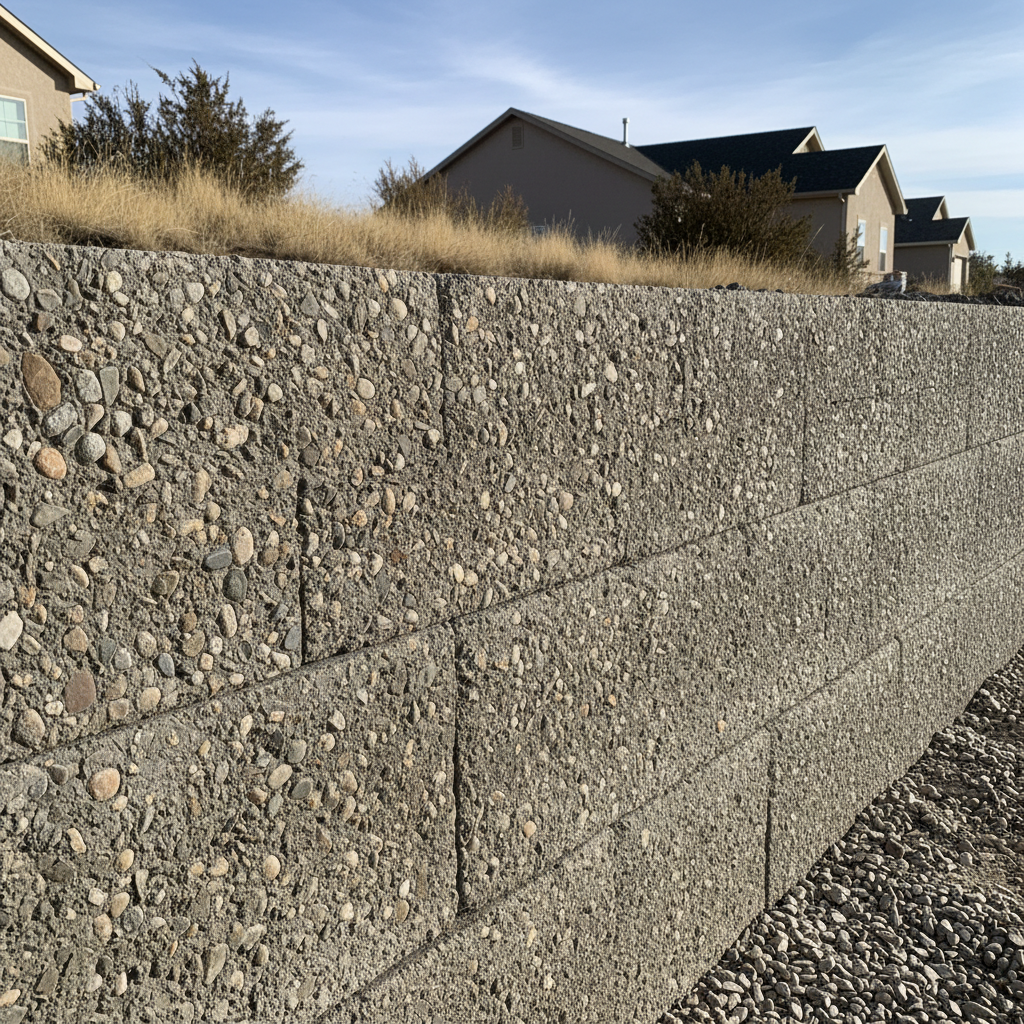
Slopes in Kearns yards erode every time there is a heavy spring downpour, and homeowners are often ready to do something about it. Building a Retaining Wall is a major project, and homeowners always have many questions before getting started. Kearns Concrete hears these questions every week on job sites from Oquirrh View down toward Kearns High.
Do I need a permit for a Retaining Wall in Kearns?
A permit is usually required if a Retaining Wall is over four feet tall. Kearns sits under Salt Lake County regulations, and the county is strict once structures cross that four-foot threshold because structural failure becomes a safety hazard. Anything taller than four feet typically requires engineered drawings and a formal permit. Even if a Retaining Wall is shorter, checking local setback rules makes sure water runoff does not cause problems for neighbors.
Why do concrete walls fail out here?
Hydrostatic pressure is a major problem for retaining walls. Kearns soil has plenty of clay mixed in, and when clay gets soaked, it expands massively. If water gets trapped behind a Concrete Retaining Wall with nowhere to go, that pressure will crack or push the wall over no matter how thick the concrete was poured. Proper drainage gravel and weep holes are required elements that keep a Retaining Wall standing ten years from now.
How deep do the footings need to go?
Kearns experiences real freeze-thaw cycles, meaning the ground freezes several inches deep every winter. If a concrete footing sits above the frost line, shifting ice lenses will heave and twist a Retaining Wall out of alignment. Kearns building standards and standard construction practices require digging down below local frost depth before pouring the reinforced concrete footer for any Retaining Wall.
Poured concrete or block—which is better?
Poured concrete offers maximum strength and a solid look, but it requires heavy forming and often a pump truck. Segmented concrete blocks are easier to manage for certain layouts and handle minor settling a bit better because of the dry-stacked, pinned design. For a structure that will last for many years in Kearns, poured concrete is a very durable choice for a Retaining Wall.
How much does a solid Retaining Wall cost?
Prices fluctuate based on height, length, site access, and how much dirt Kearns Concrete has to haul away, but a professional-grade Retaining Wall generally costs between thirty and sixty dollars per square foot installed. If a contractor quotes a price way below that range, they are likely skipping rebar, skimping on base preparation, or ignoring drainage. Kearns Concrete does not cut those corners because fixing a collapsed Retaining Wall costs twice as much as building it right the first time.
Can I backfill right after the concrete cures?
Concrete needs time to cure properly. Concrete reaches most of its compressive strength within twenty-eight days, and backfilling should not begin too early with heavy soil compacted against a fresh pour. Pushing heavy machinery or wet dirt against a green wall is an invitation for structural damage. Kearns Concrete usually allows the structure to cure for at least a week before doing any careful backfilling.
Homeowners tired of watching yards erode who want a straight-shooter assessment of their property can call Kearns Concrete. Our team will look at local slopes, check drainage options, and provide a realistic plan for a Retaining Wall in Kearns, UT.